AgentFlow AI – Autonomous Multi-Agent Business Proposal Generator
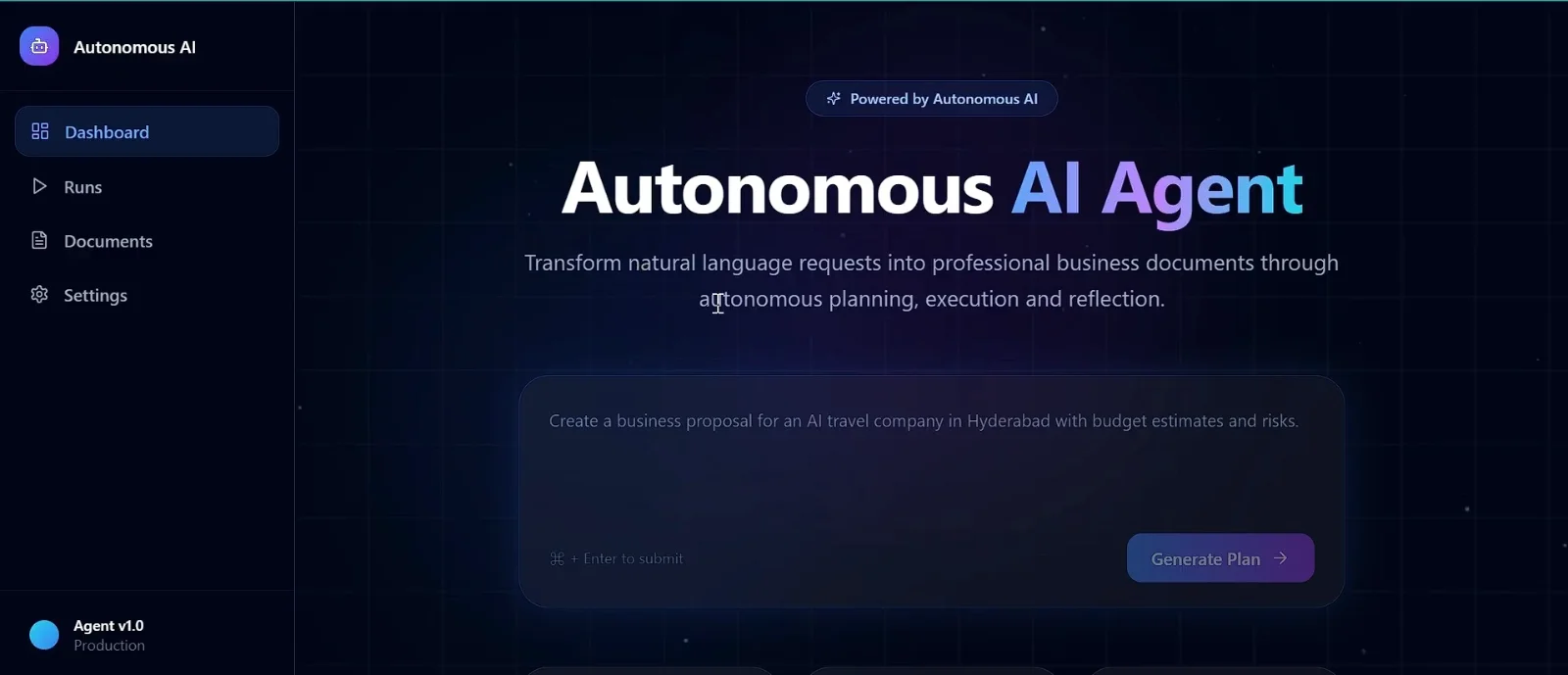
AgentFlow AI is an autonomous multi-agent platform that transforms natural language requests into professional business proposal documents. The system uses specialized AI agents for planning, execution, reflection, and document generation while providing a live workflow visualization, execution timeline, retry mechanism, and downloadable reports through an intuitive web interface.
Technologies
Overview
AgentFlow AI is a full-stack autonomous AI platform designed to convert simple natural language requests into structured, professional business documents. Instead of relying on a single AI prompt, the application orchestrates multiple specialized AI agents that collaborate through planning, execution, reflection, and document generation. The platform provides complete visibility into each stage of execution with a real-time workflow graph, execution timeline, progress tracking, and downloadable reports.
Problem
Most AI applications generate responses using a single prompt, making the reasoning process opaque and difficult to monitor. Users have little visibility into how information is generated, which tasks are completed, or whether the output has been reviewed for completeness. This lack of transparency becomes a challenge for complex document generation workflows requiring multiple logical steps and quality assurance.
Solution
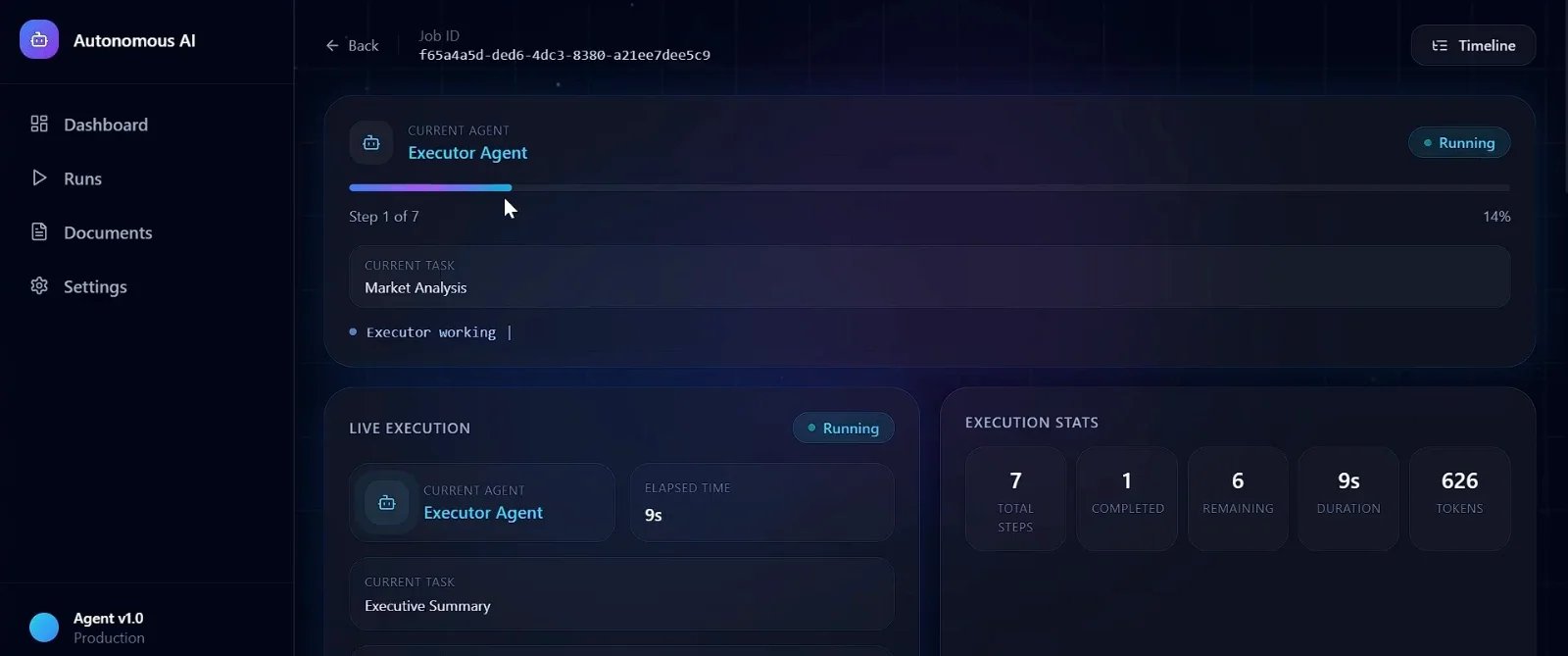
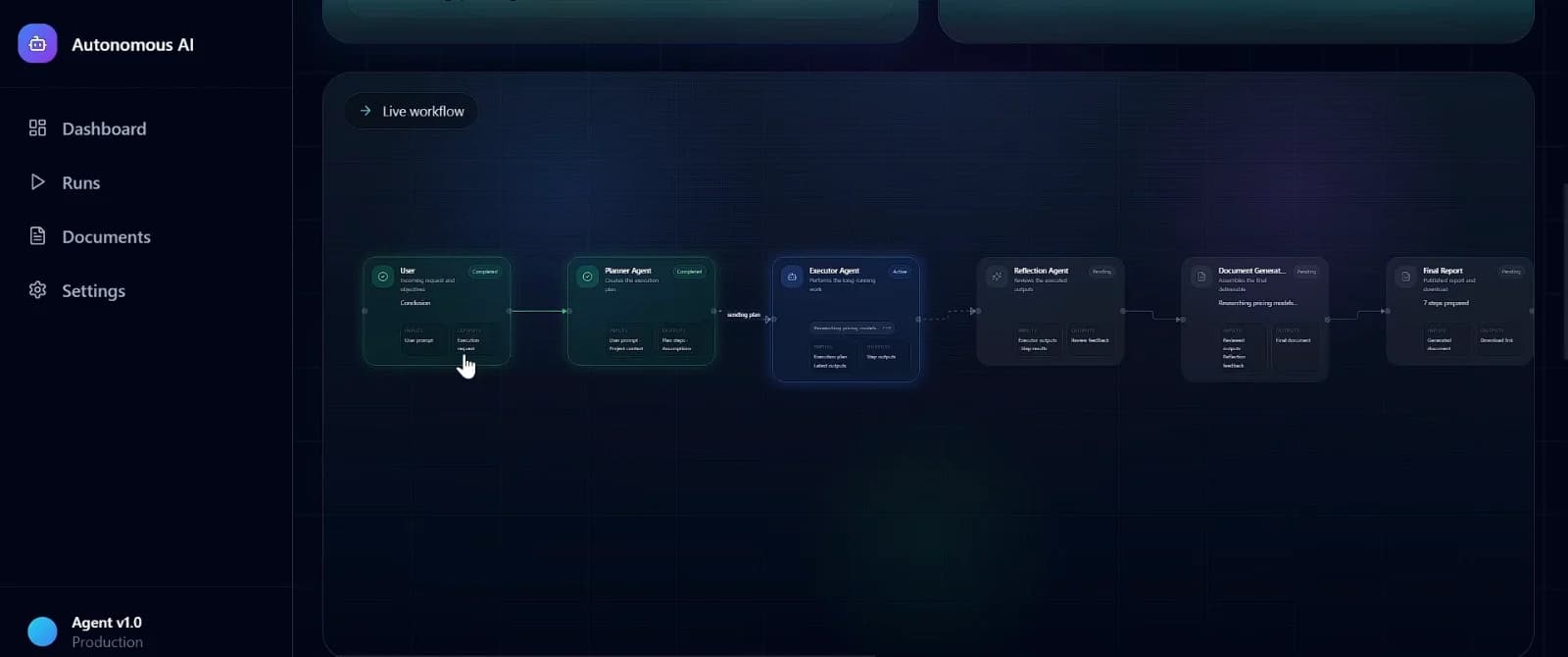
To address these limitations, I developed AgentFlow AI using an autonomous multi-agent architecture. The platform separates responsibilities across specialized agents: • Planner Agent generates assumptions and creates an execution plan. • Executor Agent processes each task sequentially and generates content. • Reflection Agent reviews generated content for quality and completeness. • Document Generator compiles the final output into a professional DOCX report. The frontend continuously displays live execution status, workflow visualization, agent progress, execution statistics, and generated content, providing complete transparency throughout the process.
Architecture
The backend is built with FastAPI and follows a modular service-oriented architecture. Supabase is used for persistent job storage, execution state management, and document metadata. AI interactions are abstracted through a centralized LLM service, enabling support for multiple providers through environment variables. The frontend is built using Next.js, React, Tailwind CSS, React Flow, and Framer Motion. It visualizes the complete agent workflow, execution timeline, progress indicators, and generated results in real time through periodic backend polling. The application is deployed using Vercel for both frontend and backend, while Supabase manages persistent storage and document generation.
Results
• Successfully developed an autonomous multi-agent AI platform. • Implemented Planner, Executor, Reflection, and Document Generator agents. • Built a transparent workflow visualization using React Flow. • Added real-time execution timeline and progress tracking. • Implemented retry mechanisms for LLM failures. • Generated downloadable professional DOCX reports. • Configured deployment on Vercel with Supabase backend integration. • Designed an extensible architecture supporting multiple LLM providers through environment variables.
Screenshots